Industrial Formulation
See the Chemistry Behind Formulation Performance
Trusted by






















Specialty chemistry is still too dependent on trial and error.
PFAS, chromates, VOCs, phosphorus-containing additives, and other high-concern chemistries are facing tighter regulatory and customer pressure. But replacement candidates rarely arrive with the property data R&D teams need.
Compular Lab brings molecular modelling into specialty and green chemistry R&D, helping you understand why replacement candidates work, why they fail, and which molecules are worth testing when regulations, specifications, or safety constraints change
Lubricant Formulation
Design EV Lubricants Before the First Bench Mix.
EV e-axle fluids need tightly controlled viscosity, conductivity, stability, and shear behaviour — often with little legacy formulation data.
But every ionic liquid additive, antioxidant, base-oil blend, and concentration change can mean another round of mixing and measurement.
The challenge is molecular: cation–anion interactions, additive solvation, base-fluid compatibility, and decomposition pathways all shape the properties your customer sees.
Formulation shortlists that reduce the number of bench mixes required


Viscosity and conductivity
across additive packages, concentrations, base oils, and temperatures

Structure–property relationships
linking molecular organisation to measured transport behaviour

Chemical and electrochemical stability
for additive and ZDDP-alternative screening

Antioxidant performance indicators
including bond dissociation energies for radical-scavenging candidates
Thermal Management
Fluids & Refrigerants
Screen Thermal Fluids Before Long-Duration Testing
Thermally stable coolants and low-GWP refrigerant blends are under growing pressure from regulation, OEM specifications, and electrified powertrain requirements.
Each candidate may need viscosity, thermal conductivity, dielectric behaviour, and degradation data across operating temperatures. But long-duration stability testing is too slow and expensive to use as an early screening tool.
We help you with candidate screening so that you focus testing only the most promising formulations
Corrosion Inhibitor Formulation
Faster Corrosion Validation
Corrosion testing often tells you what failed, not why.
A typical inhibitor workflow means formulating a package, applying it, exposing it for 30–90 days, then inspecting the result. When the substrate, electrolyte, temperature, or operating environment changes, much of that empirical learning may not transfer.
The bottleneck is mechanism: which inhibitor species are active, how they adsorb at the metal surface, how stable they are, and why one formulation protects while another fails.
We help you shortlist most promising candidates
Candidate ranking
using electronic-structure descriptors such as HOMO/LUMO energies and adsorption-relevant properties
Speciation and transport
across composition, temperature, and pH
Metal–solution interface structure
how inhibitor species arrange at charged surfaces under relevant conditions
Molecular stability
which inhibitors may degrade, through which pathways, and under which operating conditions
Solvation structure
how extractants coordinate target metal ions across diluents and aqueous conditions
Solvation structure
how extractants coordinate target metal ions across diluents and aqueous conditions
Transport properties
Across your formulation space, validated against published density data within 1.4%
Transport properties
Across your formulation space, validated against published density data within 1.4%
Extractant degradation
which functional groups may break down, what products form, and how they may affect selectivity
Extractant degradation
which functional groups may break down, what products form, and how they may affect selectivity
Diluent effects
how candidate diluents influence speciation, phase behaviour, and extraction performance
Diluent effects
how candidate diluents influence speciation, phase behaviour, and extraction performance
Solvation structure
how extractants coordinate target metal ions across diluents and aqueous conditions
Transport properties
Across your formulation space, validated against published density data within 1.4%
Extractant degradation
which functional groups may break down, what products form, and how they may affect selectivity
Diluent effects
how candidate diluents influence speciation, phase behaviour, and extraction performance
Extraction & Separation
Chemicals
Extraction & Separation
Chemicals
Stop Screening Solvent Extraction Formulations Blind
Stop Screening Solvent Extraction Formulations Blind
Solvent extraction development still relies heavily on empirical cycling: adjust extractant ratios, change diluents, test phase behaviour, measure selectivity, then repeat.
Each new metal system, purity target, or process condition can trigger another round of separatory funnel work with many formulation changes offering little improvement.
The key chemistry is molecular: how the extractant coordinates the target ion, how the diluent shifts speciation and phase behaviour, and how degradation products affect selectivity over time.
Solvent extraction development still relies heavily on empirical cycling: adjust extractant ratios, change diluents, test phase behaviour, measure selectivity, then repeat.
Each new metal system, purity target, or process condition can trigger another round of separatory funnel work with many formulation changes offering little improvement.
The key chemistry is molecular: how the extractant coordinates the target ion, how the diluent shifts speciation and phase behaviour, and how degradation products affect selectivity over time.
Thermal Management Fluids & Refrigerants
Screen Thermal Fluids Before Long-Duration Testing
Thermally stable coolants and low-GWP refrigerant blends are under growing pressure from regulation, OEM specifications, and electrified powertrain requirements.
Each candidate may need viscosity, thermal conductivity, dielectric behaviour, and degradation data across operating temperatures. But long-duration stability testing is too slow and expensive to use as an early screening tool.
We help you with candidate screening so that you focus testing only the most promising formulations
Thermal degradation pathways
which bonds are most likely to break, what products may form, and how they affect long-term stability
Transport properties
viscosity and thermal conductivity across relevant operating temperatures
Dielectric and electrochemical stability
especially where fluids contact electrically active components
Extraction & Separation Chemicals
Stop Screening Solvent Extraction Formulations Blind
Solvent extraction development still relies heavily on empirical cycling: adjust extractant ratios, change diluents, test phase behaviour, measure selectivity, then repeat.
Each new metal system, purity target, or process condition can trigger another round of separatory funnel work with many formulation changes offering little improvement.
The key chemistry is molecular: how the extractant coordinates the target ion, how the diluent shifts speciation and phase behaviour, and how degradation products affect selectivity over time.
Solvation structure
how extractants coordinate target metal ions across diluents and aqueous conditions
Transport properties
density, viscosity, and diffusivity across targeted formulation space
Extractant degradation
which functional groups may break down, what products form, and how they may affect selectivity
Diluent effects
how candidate diluents influence speciation, phase behaviour, and extraction performance
Industrial Formulation
See the Chemistry Behind Formulation Performance

Industrial Formulation
See the Chemistry Behind Formulation Performance
Trusted by
Lubricants, corrosion inhibitors, thermal fluids, extraction chemicals — all follow the same R&D loop: blend, test, measure, adjust. Each cycle takes weeks and the result tells you what happened, not why. When a customer changes their spec, a regulation restricts an ingredient, or you move to a new substrate, your accumulated empirical knowledge doesn't transfer. The design space is too large for bench screening and the cost of a wrong formulation shows up as failed field trials, lost customer qualifications, and months of rework.
Lubricant Formulation
Lubricant Formulation
Design EV Lubricants Before the First Bench Mix.
Design EV Lubricants Before the First Bench Mix.
EV e-axle fluids need tightly controlled viscosity, conductivity, stability, and shear behaviour — often with little legacy formulation data.
But every ionic liquid additive, antioxidant, base-oil blend, and concentration change can mean another round of mixing and measurement.
The challenge is molecular: cation–anion interactions, additive solvation, base-fluid compatibility, and decomposition pathways all shape the properties your customer sees.
Formulation shortlists that reduce the number of bench mixes required
EV e-axle fluids need tightly controlled viscosity, conductivity, stability, and shear behaviour — often with little legacy formulation data.
But every ionic liquid additive, antioxidant, base-oil blend, and concentration change can mean another round of mixing and measurement.
The challenge is molecular: cation–anion interactions, additive solvation, base-fluid compatibility, and decomposition pathways all shape the properties your customer sees.
Formulation shortlists that reduce the number of bench mixes required
Viscosity and conductivity
across additive packages, concentrations, base oils, and temperatures
Viscosity and conductivity
across additive packages, concentrations, base oils, and temperatures
Structure–property relationships
linking molecular organisation to measured transport behaviour
Structure–property relationships
linking molecular organisation to measured transport behaviour
Chemical and electrochemical stability
for additive and ZDDP-alternative screening
Chemical and electrochemical stability
for additive and ZDDP-alternative screening
Antioxidant performance indicators
including bond dissociation energies for radical-scavenging candidates
Antioxidant performance indicators
including bond dissociation energies for radical-scavenging candidates
Viscosity and conductivity
across additive packages, concentrations, base oils, and temperatures
Structure–property relationships
linking molecular organisation to measured transport behaviour
Chemical and electrochemical stability
for additive and ZDDP-alternative screening
Antioxidant performance indicators
including bond dissociation energies for radical-scavenging candidates
Candidate ranking
using electronic-structure descriptors such as HOMO/LUMO energies and adsorption-relevant properties
Candidate ranking
using electronic-structure descriptors such as HOMO/LUMO energies and adsorption-relevant properties
Speciation and transport
across composition, temperature, and pH
Speciation and transport
across composition, temperature, and pH
Metal–solution interface structure
how inhibitor species arrange at charged surfaces under relevant conditions
Metal–solution interface structure
how inhibitor species arrange at charged surfaces under relevant conditions
Molecular stability
which inhibitors may degrade, through which pathways, and under which operating conditions
Molecular stability
which inhibitors may degrade, through which pathways, and under which operating conditions
Candidate ranking
using electronic-structure descriptors such as HOMO/LUMO energies and adsorption-relevant properties
Speciation and transport
across composition, temperature, and pH
Metal–solution interface structure
how inhibitor species arrange at charged surfaces under relevant conditions
Molecular stability
which inhibitors may degrade, through which pathways, and under which operating conditions
Corrosion Inhibitor
Formulation
Corrosion Inhibitor
Formulation
Faster Corrosion Validation
Faster Corrosion Validation
Corrosion testing often tells you what failed, not why.
A typical inhibitor workflow means formulating a package, applying it, exposing it for 30–90 days, then inspecting the result. When the substrate, electrolyte, temperature, or operating environment changes, much of that empirical learning may not transfer.
The bottleneck is mechanism: which inhibitor species are active, how they adsorb at the metal surface, how stable they are, and why one formulation protects while another fails.
We help you shortlist most promising candidates
Corrosion testing often tells you what failed, not why.
A typical inhibitor workflow means formulating a package, applying it, exposing it for 30–90 days, then inspecting the result. When the substrate, electrolyte, temperature, or operating environment changes, much of that empirical learning may not transfer.
The bottleneck is mechanism: which inhibitor species are active, how they adsorb at the metal surface, how stable they are, and why one formulation protects while another fails.
We help you shortlist most promising candidates
Thermal degradation pathways
which bonds are most likely to break, what products may form, and how they affect long-term stability
Thermal degradation pathways
which bonds are most likely to break, what products may form, and how they affect long-term stability
Transport properties
viscosity and thermal conductivity across relevant operating temperatures
Transport properties
viscosity and thermal conductivity across relevant operating temperatures
Dielectric and electrochemical stability
especially where fluids contact electrically active components
Dielectric and electrochemical stability
especially where fluids contact electrically active components
Dielectric and electrochemical stability
especially where fluids contact electrically active components
Dielectric and electrochemical stability
especially where fluids contact electrically active components
Thermal degradation pathways
which bonds are most likely to break, what products may form, and how they affect long-term stability
Transport properties
viscosity and thermal conductivity across relevant operating temperatures
Dielectric and electrochemical stability
especially where fluids contact electrically active components
Dielectric and electrochemical stability
especially where fluids contact electrically active components
Thermal Management
Fluids & Refrigerants
You need to qualify a thermally stable coolant or low-GWP refrigerant blend. The 500-hour stability test is the bottleneck.
Screen Thermal Fluids Before Long-Duration Testing
EU F-gas phase-down, China's GB 29743.2, tightening OEM specifications — your product roadmap is being rewritten by regulation. Every candidate needs viscosity, thermal conductivity, and dielectric constant across operating temperatures, plus a degradation profile that won't surprise you after six months of fleet testing. Running 500-hour stability tests on every candidate is not a screening method.
Thermally stable coolants and low-GWP refrigerant blends are under growing pressure from regulation, OEM specifications, and electrified powertrain requirements.
Each candidate may need viscosity, thermal conductivity, dielectric behaviour, and degradation data across operating temperatures. But long-duration stability testing is too slow and expensive to use as an early screening tool.
We help you with candidate screening so that you focus testing only the most promising formulations
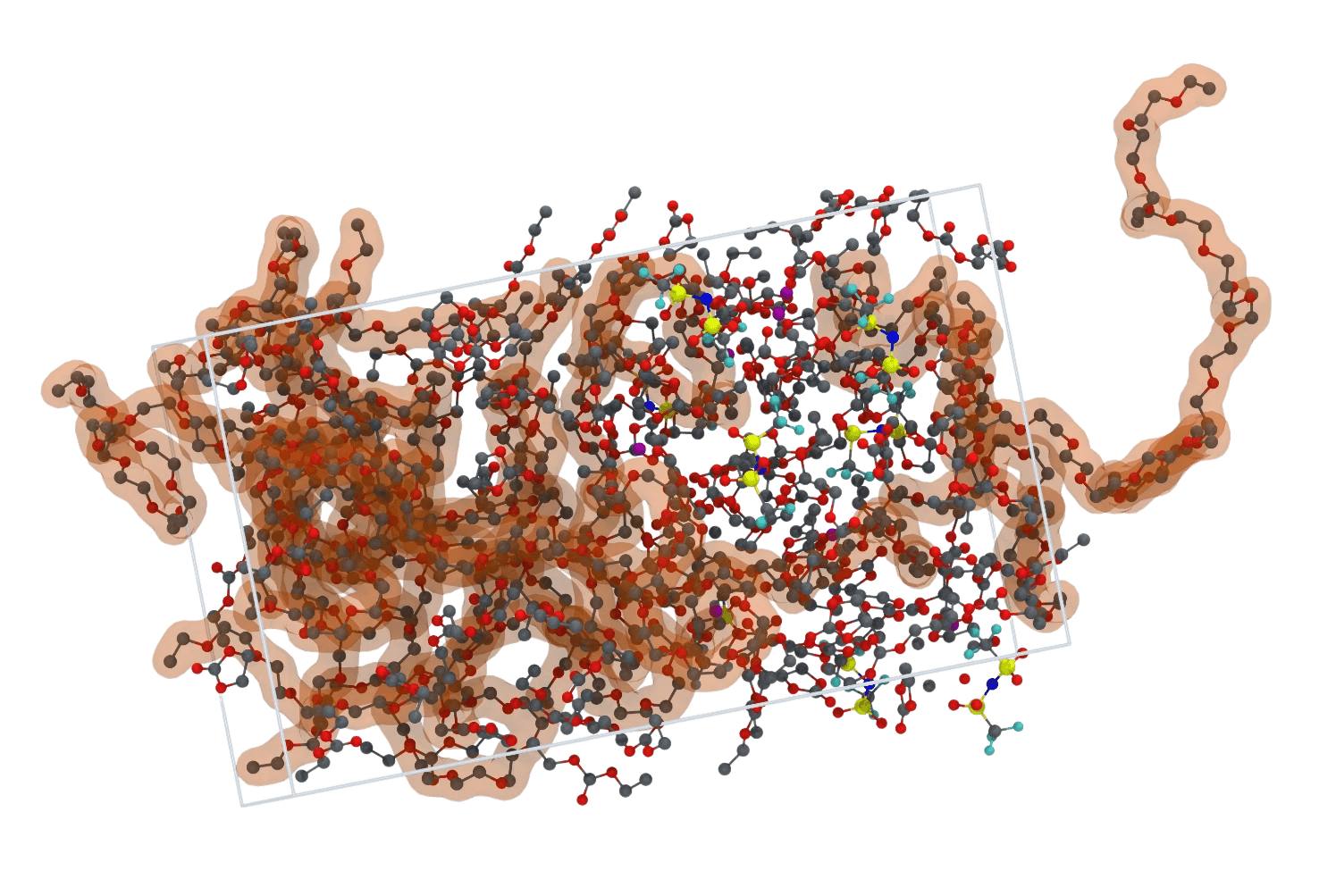
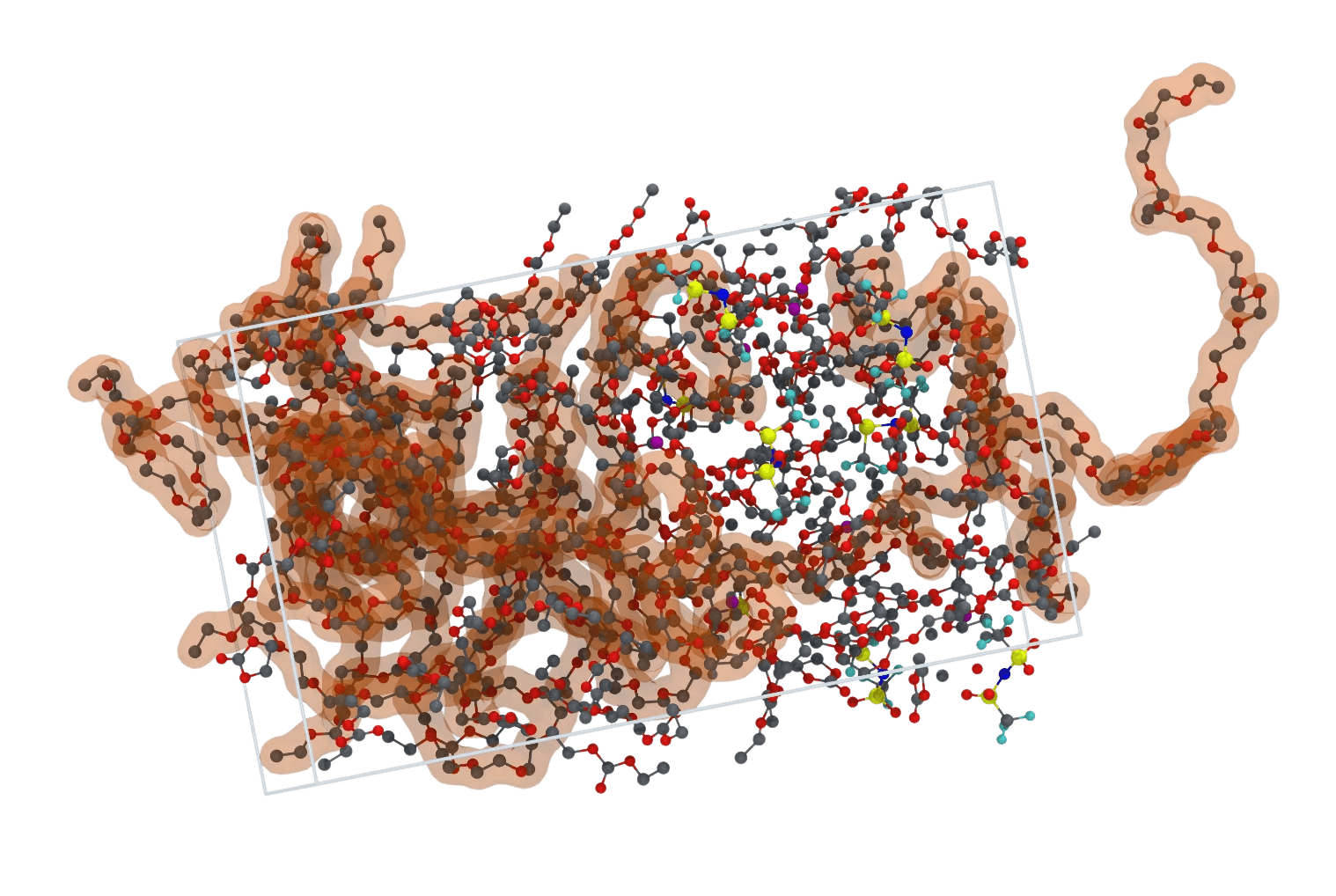
Demo simulation: Nafion oligomer (trimer) in water/n-propanol at 5 wt%. Predict viscosity, density, and ionomer aggregation structure. Compare density against published data for Nafion dispersions.
Frequently Asked Questions
From setup to support, here are the answers you need to launch faster with confidence.
Do I need design or coding experience to use this?
More than just SaaS—perfect for creators, freelancers, and agencies who want sleek, high-performing sites fast.
Can I customize everything in the template?
Is this template only for SaaS founders?
How fast can I get my site live?
Can I use this for client projects?
Is Framer free to use with this template?
What is Compular Lab?
How does Compular Lab help material development?
Who can use Compular Lab?
What types of material properties can Compular Lab analyse?
Can you simulate multi-component systems such as electrolytes or complex formulations?
Can you simulate electrolytes as a function of temperature and voltage?
Do you provide molecular-level insights?
Does Compular Lab run simulations automatically?
Is there a demo or trial version available?
What makes Compular Lab different from traditional material R&D?
Frequently Asked Questions
Frequently Asked Questions
What is Compular Lab?
How does Compular Lab help material development?
Who can use Compular Lab?
What types of material properties can Compular Lab analyse?
Can you simulate multi-component systems such as electrolytes or complex formulations?
Can you simulate electrolytes as a function of temperature and voltage?
Do you provide molecular-level insights?
Does Compular Lab run simulations automatically?
Is there a demo or trial version available?
What makes Compular Lab different from traditional material R&D?

Accelerate materials discovery
with AI & multiscale simulations.
Compular turns complex molecular design into fast, reliable predictions, helping researchers innovate and drive sustainable solutions.
Accelerate materials discovery
with AI & multiscale simulations.
Compular turns complex molecular design into fast, reliable predictions, helping researchers innovate and drive sustainable solutions.