Personal Care and Cosmetics
Molecular Modelling for Faster Cosmetic Reformulation
Trusted by





















Personal care and cosmetics formulation is still too dependent on trial and error.
Emulsions, cleansing systems, active delivery vehicles, preservatives, and sensory ingredients still rely on the same slow loop: blend, test, age, measure, adjust. Cyclic siloxanes, microplastics, PFAS, preservatives, and other high-concern chemistries are facing tighter regulatory, retailer, and consumer scrutiny.
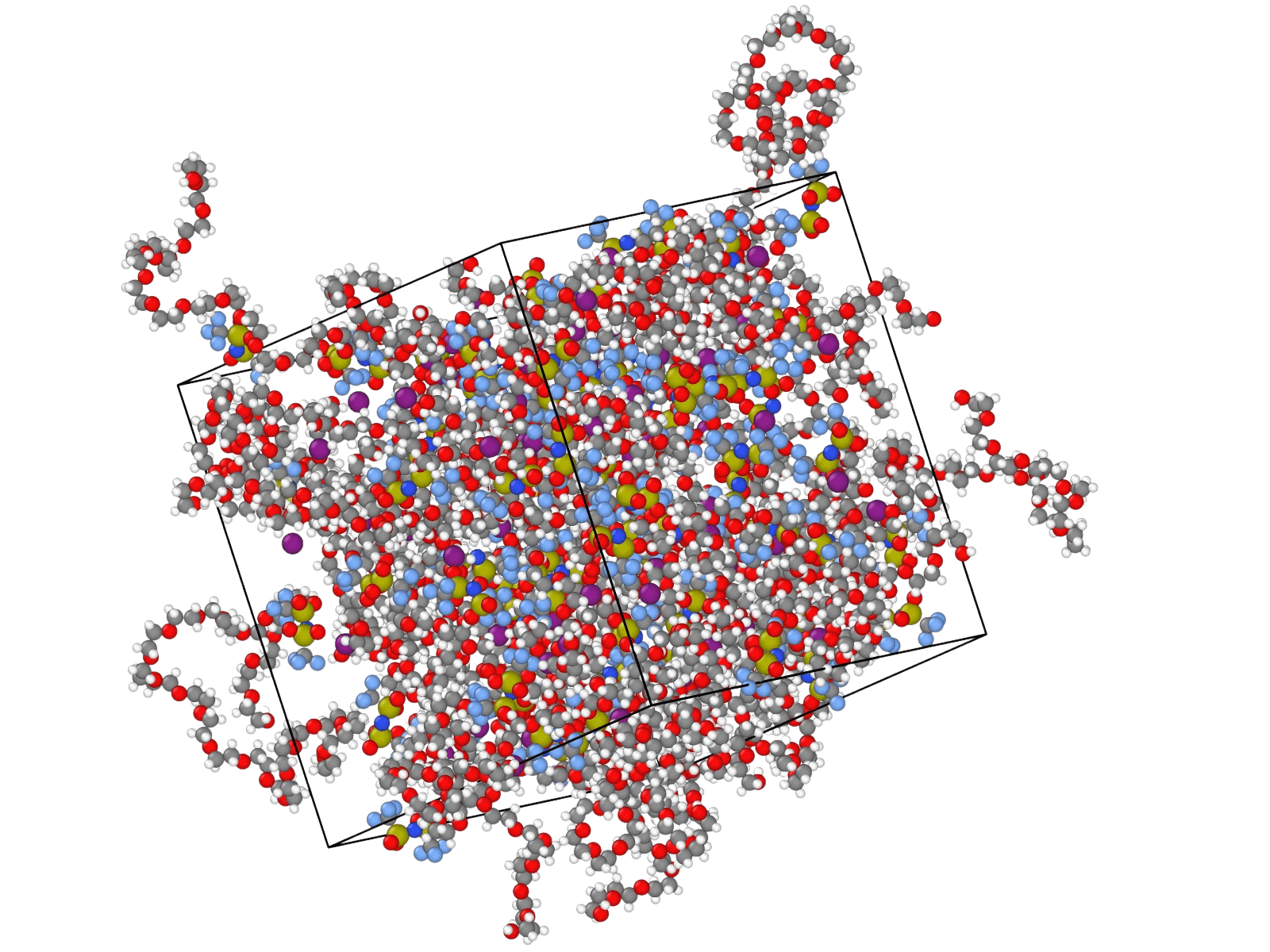
Compular Lab brings molecular simulation into personal care R&D helping formulation teams predict physical properties, screen ingredient replacements and understand degradation risks before you build a formulation.
Fewer iterations. Less hazardous bench work. Faster reformulation decisions across emulsions, active delivery, cleansing systems and regulatory-driven ingredient replacement.
Emulsion & Texture Engineering
Understand Why an Emulsion Fails
Emulsion & Texture Engineering
Emulsion & Texture Engineering
Understand Why an Emulsion Fails
Compular Lab models oil–water interfaces, emulsifier compatibility, viscosity trends, and degradation risks before formulation teams commit to long aging studies.
Use molecular insight to understand why an emulsion is likely to remain stable, cream, separate, or fail when emulsifiers, oils, actives, or regulatory constraints change.
Compular Lab models oil–water interfaces, emulsifier compatibility, viscosity trends, and degradation risks before formulation teams commit to long aging studies.
Use molecular insight to understand why an emulsion is likely to remain stable, cream, separate, or fail when emulsifiers, oils, actives, or regulatory constraints change.


Interfacial interaction energy
of emulsifier candidates at the oil-water interface across HLB range

Bulk viscosity
prediction across emulsifier concentration and co-emulsifier ratio space

Molecular compatibility screening
of replacement emulsifier candidates before stability testing

Degradation risk assessment
for bio-derived and novel emulsifiers under process conditions
Interfacial interaction energy
of emulsifier candidates at the oil-water interface across HLB range
Interfacial interaction energy
of emulsifier candidates at the oil-water interface across HLB range
Bulk viscosity
prediction across emulsifier concentration and co-emulsifier ratio space
Bulk viscosity
prediction across emulsifier concentration and co-emulsifier ratio space
Molecular compatibility screening
of replacement emulsifier candidates before stability testing
Molecular compatibility screening
of replacement emulsifier candidates before stability testing
Degradation risk assessment
for bio-derived and novel emulsifiers under process conditions
Degradation risk assessment
for bio-derived and novel emulsifiers under process conditions
Personal Care and Cosmetics
Molecular Modelling for Faster Cosmetic Reformulation
Silicone & Cyclic Siloxane Replacement
Silicone & Cyclic Siloxane Replacement
Move Beyond Cyclic Siloxanes with Molecular Insigh
D4, D5, and D6 face EU restrictions and reformulation pressure is increasing across rinse-off and leave-on categories. But alternatives rarely reproduce the full siloxane profile: low friction, volatility, spreadability,
thermal stability, and skin feel. Each replacement candidate can trigger blending, sensory panels, compatibility checks, and stability studies.
Compular Lab brings molecular modelling into siloxane replacement R&D, helping you understand which alternatives may deliver the right viscosity, diffusion, solvation, compatibility, and oxidative stability before entering sensory or shelf-life testing.
Viscosity, density, and diffusivity predictions
across replacement candidate library
Solvation structure analysis
how the API is coordinated in each excipient system, explaining stability and compatibility differences across grades.
Molecular compatibility screening
with co-formulated ingredients (emulsifiers, actives, preservatives)
Oxidative degradation pathway assessment
for bio-based and ester alternatives
Silicone & Cyclic Siloxane Replacement
Move Beyond Cyclic Siloxanes with Molecular Insigh
D4, D5, and D6 face EU restrictions and reformulation pressure is increasing across rinse-off and leave-on categories. But alternatives rarely reproduce the full siloxane profile: low friction, volatility, spreadability,
thermal stability, and skin feel. Each replacement candidate can trigger blending, sensory panels, compatibility checks, and stability studies.
Compular Lab brings molecular modelling into siloxane replacement R&D, helping you understand which alternatives may deliver the right viscosity, diffusion, solvation, compatibility, and oxidative stability before entering sensory or shelf-life testing.
Viscosity, density, and diffusivity predictions
across replacement candidate library
Viscosity, density, and diffusivity predictions
across replacement candidate library
Solvation structure analysis
how the API is coordinated in each excipient system, explaining stability and compatibility differences across grades.
Solvation structure analysis
how the API is coordinated in each excipient system, explaining stability and compatibility differences across grades.
Molecular compatibility screening
with co-formulated ingredients (emulsifiers, actives, preservatives)
Molecular compatibility screening
with co-formulated ingredients (emulsifiers, actives, preservatives)
Oxidative degradation pathway assessment
for bio-based and ester alternatives
Oxidative degradation pathway assessment
for bio-based and ester alternatives
Surfactant & Cleansing System Design
Screen Cleansing Blends Before Consumer Testing.
Primary surfactant selection, co-surfactant tuning, pH optimisation each iteration takes time. Aggregation behaviour, micelle size, and competitive adsorption at the skin surface all depend on the specific combination and concentration, but your macroscopic bench tests do not resolve these interactions.
Compular Lab predicts micelle formation and aggregation across concentration and pH space. Understand why one surfactant blend feels milder, why lather changes at higher concentration, and whether fragrance or active additives are compatible with the micellar core before you go to bench.
Micelle formation and aggregation behaviour predictions
across surfactant concentration and pH
Micelle formation and aggregation behaviour predictions
across surfactant concentration and pH
Head-group and tail-group interaction analysis
explaining mildness and lather behaviour
Head-group and tail-group interaction analysis
explaining mildness and lather behaviour
Micellar core compatibility screening
for fragrance and active ingredient additives
Micellar core compatibility screening
for fragrance and active ingredient additives
CMC estimates
for novel and amino acid-derived surfactant candidates
CMC estimates
for novel and amino acid-derived surfactant candidates
Mixture & anti-solvent systems
binary and ternary solvent–anti-solvent combinations are directly tractable — the screen does not stop at single solvents.
Mixture & anti-solvent systems
binary and ternary solvent–anti-solvent combinations are directly tractable — the screen does not stop at single solvents.
Active Ingredient Solubilisation & Delivery
Predict Active Delivery Before Formulation Testing
Retinoids, vitamin C derivatives, AHAs, peptides, and other cosmetic actives each bring different solubility,
compatibility, and degradation risks. Teams screen co-solvents, carriers, cyclodextrins, lipid systems, and excipient packages but oxidation, hydrolysis, UV sensitivity, or pH-driven degradation may only appear weeks into accelerated stability testing.
Compular Lab models active–carrier interactions, solubilisation, excipient compatibility, and degradation pathways before long stability programmes begin.
Use molecular simulation to identify which carrier systems are more likely to protect sensitive actives under realistic formulation conditions.
Solvation structure and solubilisation quality predictions
for active molecules in candidate carriers
Solvation structure and solubilisation quality predictions
for active molecules in candidate carriers
Interaction energy ranking
between actives and excipients compatibility screening before bench work
Interaction energy ranking
between actives and excipients compatibility screening before bench work
Environmental trigger identification
(O2, pH, UV, temperature) driving degradation risk per active
Environmental trigger identification
(O2, pH, UV, temperature) driving degradation risk per active
Degradation pathway mapping
which bonds break first, under which conditions
Degradation pathway mapping
which bonds break first, under which conditions
Preservative System Optimisation
Know Which Preservative Species Is Active
PChallenge tests tell you whether a formulation passes criteria, but they do not fully explain which preservative species is active at your pH, how co-formulants affect availability, or why efficacy changes between O/W and W/O systems.
Compular Lab brings molecular modelling into preservative-system R&D, helping you understand speciation, partitioning, compatibility, and active-species distribution before reformulating or entering challenge testing
Preservative molecular speciation
as a function of pH and co-formulant composition
Preservative molecular speciation
as a function of pH and co-formulant composition
Aqueous/lipid partition coefficient predictions
directly relevant to antimicrobial effectiveness
Aqueous/lipid partition coefficient predictions
directly relevant to antimicrobial effectiveness
O/W vs W/O emulsion performance comparison
for candidate preservative systems
O/W vs W/O emulsion performance comparison
for candidate preservative systems
Minimum effective concentration guidance
based on active-species distribution modelling
Minimum effective concentration guidance
based on active-species distribution modelling
Regulatory Reformulation at Portfolio Scale
Screen Ingredient Replacements Across the Portfolio
Microplastics restrictions, cyclic siloxane controls, PFAS pressure, CMR substance controls, allergen and sensitisation thresholds, and preservative constraints can trigger simultaneous reformulation across emulsifiers, emollients, preservatives, surfactants, conditioning agents, and active-delivery systems.
Compular Lab helps personal care brands screen ingredient replacements across large SKU portfolios before bench work. Use molecular simulation to predict properties, compatibility, partitioning, and degradation risk so you can prioritise the candidates most likely to satisfy performance, stability, and regulatory constraints.
Focus on the top-screened candidates. The rest do not reach the bench.
High-throughput viscosity, density, and partition coefficient screening
across candidate replacement libraries
High-throughput viscosity, density, and partition coefficient screening
across candidate replacement libraries
Molecular compatibility flags
identifying component interactions before bench work
Molecular compatibility flags
identifying component interactions before bench work
Degradation risk assessment
for incoming ingredients under process and shelf conditions
Degradation risk assessment
for incoming ingredients under process and shelf conditions
Ranked shortlists
the candidates most likely to meet performance and stability criteria
Ranked shortlists
the candidates most likely to meet performance and stability criteria
Surfactant & Cleansing System Design
Surfactant & Cleansing System Design
Screen Cleansing Blends Before Consumer Testing.
Primary surfactant selection, co-surfactant tuning, pH optimisation each iteration takes time. Aggregation behaviour, micelle size, and competitive adsorption at the skin surface all depend on the specific combination and concentration, but your macroscopic bench tests do not resolve these interactions.
Compular Lab predicts micelle formation and aggregation across concentration and pH space. Understand why one surfactant blend feels milder, why lather changes at higher concentration, and whether fragrance or active additives are compatible with the micellar core before you go to bench.
Micelle formation and aggregation behaviour predictions
across surfactant concentration and pH
Head-group and tail-group interaction analysis
explaining mildness and lather behaviour
Micellar core compatibility screening
for fragrance and active ingredient additives
CMC estimates
for novel and amino acid-derived surfactant candidates
Active Ingredient Solubilisation & Delivery
Active Ingredient Solubilisation & Delivery
Predict Active Delivery Before Formulation Testing
Retinoids, vitamin C derivatives, AHAs, peptides, and other cosmetic actives each bring different solubility,
compatibility, and degradation risks. Teams screen co-solvents, carriers, cyclodextrins, lipid systems, and excipient packages but oxidation, hydrolysis, UV sensitivity, or pH-driven degradation may only appear weeks into accelerated stability testing.
Compular Lab models active–carrier interactions, solubilisation, excipient compatibility, and degradation pathways before long stability programmes begin.
Use molecular simulation to identify which carrier systems are more likely to protect sensitive actives under realistic formulation conditions.
.
Solvation structure and solubilisation quality predictions
for active molecules in candidate carriers
Interaction energy ranking
between actives and excipients compatibility screening before bench work
Degradation pathway mapping
which bonds break first, under which conditions
Environmental trigger identification
(O2, pH, UV, temperature) driving degradation risk per active
Preservative System Optimisation
Preservative System Optimisation
Know Which Preservative Species Is Active
PChallenge tests tell you whether a formulation passes criteria, but they do not fully explain which preservative species is active at your pH, how co-formulants affect availability, or why efficacy changes between O/W and W/O systems.
Compular Lab brings molecular modelling into preservative-system R&D, helping you understand speciation, partitioning, compatibility, and active-species distribution before reformulating or entering challenge testing
Preservative molecular speciation
as a function of pH and co-formulant composition
Aqueous/lipid partition coefficient predictions
directly relevant to antimicrobial effectiveness
O/W vs W/O emulsion performance comparison
for candidate preservative systems
Minimum effective concentration guidance
based on active-species distribution modelling
Regulatory Reformulation at Portfolio Scale
Regulatory Reformulation at Portfolio Scale
Screen Ingredient Replacements Across the Portfolio
Microplastics restrictions, cyclic siloxane controls, PFAS pressure, CMR substance controls, allergen and sensitisation thresholds, and preservative constraints can trigger simultaneous reformulation across emulsifiers, emollients, preservatives, surfactants, conditioning agents, and active-delivery systems.
Compular Lab helps personal care brands screen ingredient replacements across large SKU portfolios before bench work. Use molecular simulation to predict properties, compatibility, partitioning, and degradation risk so you can prioritise the candidates most likely to satisfy performance, stability, and regulatory constraints.
Focus on the top-screened candidates. The rest do not reach the bench.
High-throughput viscosity, density, and partition coefficient screening
across candidate replacement libraries
Molecular compatibility flags
identifying component interactions before bench work
Degradation risk assessment
for incoming ingredients under process and shelf conditions
Ranked shortlists
the candidates most likely to meet performance and stability criteria
Personal Care and Cosmetics
Molecular Modelling for Faster Cosmetic Reformulation

Frequently Asked Questions
From setup to support, here are the answers you need to launch faster with confidence.
Do I need design or coding experience to use this?
More than just SaaS—perfect for creators, freelancers, and agencies who want sleek, high-performing sites fast.
Can I customize everything in the template?
Is this template only for SaaS founders?
How fast can I get my site live?
Can I use this for client projects?
Is Framer free to use with this template?
What is Compular Lab?
How does Compular Lab help material development?
Who can use Compular Lab?
What types of material properties can Compular Lab analyse?
Can you simulate multi-component systems such as electrolytes or complex formulations?
Can you simulate electrolytes as a function of temperature and voltage?
Do you provide molecular-level insights?
Does Compular Lab run simulations automatically?
Is there a demo or trial version available?
What makes Compular Lab different from traditional material R&D?
Frequently Asked Questions
Frequently Asked Questions
What is Compular Lab?
How does Compular Lab help material development?
Who can use Compular Lab?
What types of material properties can Compular Lab analyse?
Can you simulate multi-component systems such as electrolytes or complex formulations?
Can you simulate electrolytes as a function of temperature and voltage?
Do you provide molecular-level insights?
Does Compular Lab run simulations automatically?
Is there a demo or trial version available?
What makes Compular Lab different from traditional material R&D?

Accelerate materials discovery
with AI & multiscale simulations.
Compular turns complex molecular design into fast, reliable predictions, helping researchers innovate and drive sustainable solutions.
Accelerate materials discovery
with AI & multiscale simulations.
Compular turns complex molecular design into fast, reliable predictions, helping researchers innovate and drive sustainable solutions.