Trusted by















Pharmaceutical formulation R&D still moves through long experimental loops. A new co-solvent system means another containment screen. A new excipient grade means another ICH stability batch. A new API means another solvent library, screened one flask at a time. Each cycle costs material, lab time, and — for highly potent compounds — operator exposure. The design space is too large for bench-only screening, and the molecular reasons one formulation outperforms another are hard to see from outcome data alone.
Compular Lab predicts the bulk and molecular behaviour of liquid formulations before they are made: viscosity, density, diffusivity, solvation structure, and degradation pathways across your candidate space. Your team enters formulations the same way they fill in a lab notebook; results come back as a structured report. The wet-lab work that follows is targeted at the candidates simulation identified — not the full library you would have screened blind.
Fewer iterations. Less exposure. Faster formulation decisions across HPAPI, sterile injectables, and API process chemistry.
HPAPI Solvent Screening
In silico solvent screening for high-potency API development
HPAPI Solvent Screening
HPAPI Solvent Screening
In silico solvent screening for high-potency API development
Every HPAPI project starts with solvent screening in a containment suite. Your team tests 8–12 co-solvent candidates under OEB 4–5 conditions to find 1–2 viable options. Each iteration is a safety event, a timeline cost, and a material cost.
Compular Lab replaces the first 80% of that screening funnel with molecular simulation — delivering a ranked solvent shortlist before your scientists enter the containment suite. Same insight. Zero cytotoxic exposure.
Solvent systems ready today: DMSO/water, NMP/water, PG/water, ethanol/water, PEG/water, acetonitrile/water — all covered by validated OPLS-AA force fields with no custom parameterisation. Novel API parameterisation is available for proprietary compounds under NDA.
Every HPAPI project starts with solvent screening in a containment suite. Your team tests 8–12 co-solvent candidates under OEB 4–5 conditions to find 1–2 viable options. Each iteration is a safety event, a timeline cost, and a material cost.
Compular Lab replaces the first 80% of that screening funnel with molecular simulation — delivering a ranked solvent shortlist before your scientists enter the containment suite. Same insight. Zero cytotoxic exposure.
Solvent systems ready today: DMSO/water, NMP/water, PG/water, ethanol/water, PEG/water, acetonitrile/water — all covered by validated OPLS-AA force fields with no custom parameterisation. Novel API parameterisation is available for proprietary compounds under NDA.


Viscosity & density
of every co-solvent system across composition and temperature — the properties that determine processing feasibility.

Diffusivity & transport
self-diffusion coefficients across your solvent library — predicting mass transport and dissolution kinetics.

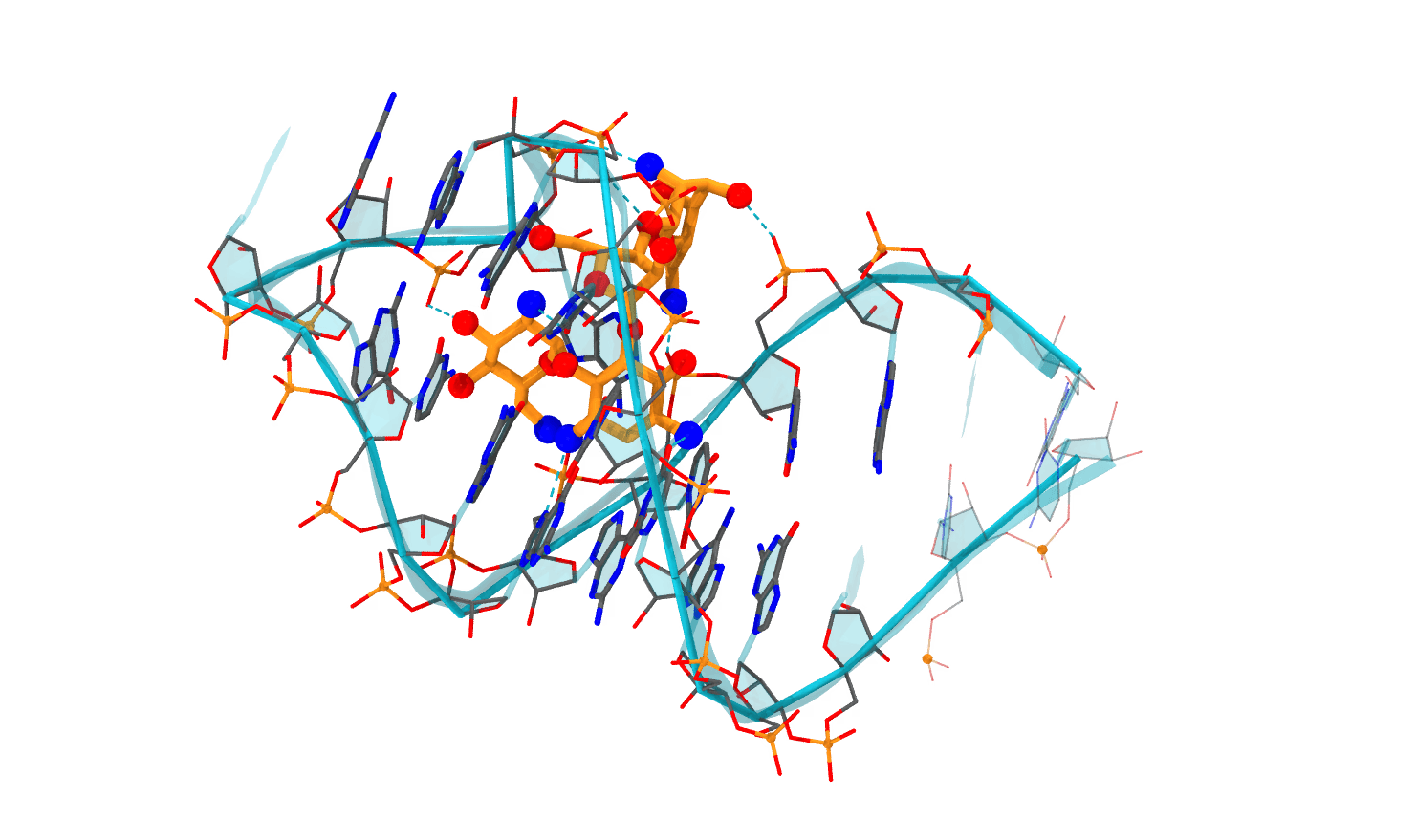
Solvation structure
how your API is coordinated in each co-solvent blend, explaining why one system outperforms another.

Degradation screening
DFT oxidation/reduction potentials and hydrolysis pathways — identifying degradation-prone conditions before stability studies
Viscosity & density
of every co-solvent system across composition and temperature — the properties that determine processing feasibility.
Viscosity & density
of every co-solvent system across composition and temperature — the properties that determine processing feasibility.
Diffusivity & transport
self-diffusion coefficients across your solvent library — predicting mass transport and dissolution kinetics.
Diffusivity & transport
self-diffusion coefficients across your solvent library — predicting mass transport and dissolution kinetics.
Solvation structure
how your API is coordinated in each co-solvent blend, explaining why one system outperforms another.
Solvation structure
how your API is coordinated in each co-solvent blend, explaining why one system outperforms another.
Degradation screening
DFT oxidation/reduction potentials and hydrolysis pathways — identifying degradation-prone conditions before stability studies
Degradation screening
DFT oxidation/reduction potentials and hydrolysis pathways — identifying degradation-prone conditions before stability studies

Benefit
Safety: every simulation run that replaces a containment-suite experiment is one fewer operator exposure event. Your EHS team will back this.
Timeline: 3–4 weeks of screening compressed to days. Oncology programme timelines stop slipping because of solvent selection bottlenecks.
Cost: each avoided closed-containment screening iteration saves €5–15k in equipment time, disposal, and API material. The pilot pays for itself in one project.
Procurement: starts as a €5k research service engagement — one signature, no IT vendor qualification. Software subscription discussion comes after a successful pilot.
Workflow
You input: your API structure (SMILES) or a published analogue, plus 5–10 candidate co-solvent systems with ratios and temperature range.
You get back: viscosity, density, diffusivity and solvation structure mapped across every candidate. DFT degradation flags for the top 3. A ranked shortlist with molecular rationale.
You skip: 6–8 containment-suite experiments. The lab work you do run is targeted at the 2–3 candidates simulation identified — not the 10 you would have screened blind.
No simulation experience required. You fill in the same information you put in your lab notebook.
Injectable & Parenteral Formulation
Predict excipient performance before the first stability batch
Every injectable project initiates 4–8 ICH stability batches before you know which excipient combination works. Excipient grade, concentration, co-solvent ratio, pH, and temperature interact in ways no DoE can fully cover at reasonable cost. Each unnecessary stability batch ties up chamber time and analytical capacity for 3–24 months and costs €30–80k in chamber, analytical, and personnel time.
Compular Lab predicts how PEG, PVP, HPMC, polysorbates and co-solvents behave in your formulation — viscosity across concentration sweeps, API–excipient interaction, degradation-prone conditions — so you initiate stability only on the 2 combinations worth testing.
Excipient systems ready today: PEG (300, 400, 600), PVP K-series, HPMC, polysorbate 80, propylene glycol, ethanol, mannitol — all standard injectable excipients covered by validated OPLS-AA force fields. Aqueous co-solvent systems (ethanol-water, PG-water, PEG-water) are pre-validated.
Viscosity across concentration
for PEG, PVP, HPMC, and polysorbate sweeps in aqueous and co-solvent vehicles — the most universally screened injectable property.
Viscosity across concentration
for PEG, PVP, HPMC, and polysorbate sweeps in aqueous and co-solvent vehicles — the most universally screened injectable property.
API–excipient interaction
how the API is coordinated in each excipient system, explaining stability and compatibility differences across grades.
API–excipient interaction
how the API is coordinated in each excipient system, explaining stability and compatibility differences across grades.
Degradation screening
DFT hydrolysis and oxidation pathways for ionisable functional groups — identifying degradation-prone conditions before ICH batches are placed.
Degradation screening
DFT hydrolysis and oxidation pathways for ionisable functional groups — identifying degradation-prone conditions before ICH batches are placed.
Refrigerated & body-temperature properties
viscosity, diffusivity, and solvation mapped from 4°C through 37°C — relevant to storage, freeze–thaw, and in-use stability questions.
Refrigerated & body-temperature properties
viscosity, diffusivity, and solvation mapped from 4°C through 37°C — relevant to storage, freeze–thaw, and in-use stability questions.
Benefit
ROI: one avoided ICH stability batch typically saves €30–80k in chamber, analytical, and personnel time. A single avoided batch pays for an annual subscription.
Timeline: ICH stability studies are the longest part of injectable development. Pre-screening shortens the path to a viable formulation by months, not weeks.
Scope: simulation results inform internal R&D shortlisting. They do not replace regulatory characterisation — but they tell you which formulations are worth placing on stability.
Procurement: starts as a €5k research service engagement — one signature, no IT vendor qualification. Subscription conversation comes after a successful pilot
Workflow
You input: your API structure (SMILES) or a published analogue, your candidate excipient list (PEG grade, PVP grade, polysorbate, co-solvent), and concentration, pH, and temperature ranges.
You get back: viscosity across the excipient concentration sweep at refrigerated and room temperature, API solvation in the top 3 excipient systems, and DFT degradation flags for ionisable groups in the API.
You skip: the first 4–6 excipient combinations placed on stability blind. The batches you do initiate are the 2 simulation ranked highest.
No simulation experience required. The web app takes formulation inputs the same way you specify a lab batch.
API Solvent Screening & Purification
Pre-rank your solvent library before the first crystallisation trial
For each new API, process chemistry screens 20–50 solvents experimentally — solubility curves, cooling profiles, yield and purity for every candidate. A full screen takes 3–4 weeks of lab time and consumes API material that, in early development, is in short supply. The screen tells you which solvent worked; it rarely tells you why, so the knowledge does not transfer cleanly to the next compound.
Compular Lab predicts solvation, transport, and temperature-dependent behaviour across your full ICH Q3C solvent library — narrowing 20–50 candidates to the top 3–5 before any material is consumed. The competitive position is clear: where COSMOtherm gives thermodynamics, Compular adds the dynamic solvation and transport layer above it.
Solvation ranking
across your entire ICH Q3C library — solvation shell geometry and interaction energy for the API in each solvent.
Solvation ranking
across your entire ICH Q3C library — solvation shell geometry and interaction energy for the API in each solvent.
Temperature dependence
20–80°C sweeps mapping how solvation strength changes with temperature — directly relevant to dissolution and cooling crystallisation.
Temperature dependence
20–80°C sweeps mapping how solvation strength changes with temperature — directly relevant to dissolution and cooling crystallisation.
Transport properties
viscosity, density, and diffusivity across the library — informing downstream filtration, drying, and processing decisions.
Transport properties
viscosity, density, and diffusivity across the library — informing downstream filtration, drying, and processing decisions.
Mixture & anti-solvent systems
binary and ternary solvent–anti-solvent combinations are directly tractable — the screen does not stop at single solvents.
Mixture & anti-solvent systems
binary and ternary solvent–anti-solvent combinations are directly tractable — the screen does not stop at single solvents.
Benefit
ROI: a 3–4 week solvent screen on a new API typically costs €15–40k in lab time and material. Pre-ranking cuts that to a focused 1-week screen.
API supply: in early development, every solvent screened consumes scarce material. Eliminating 70% of candidates computationally protects supply and accelerates programme timelines.
Differentiation: transport and dynamic solvation structure that no thermodynamic tool provides — and that experiment cannot easily measure across a 50-solvent library.
Procurement: starts as a €5k research service engagement on one live API project. Annual credit packages follow a successful first project.
Workflow
You input: your API structure (SMILES) or a published analogue, your ICH Q3C solvent library (typically 20–50 solvents), the temperature range of interest, and any anti-solvent combinations.
You get back: solvation shell analysis and interaction-energy ranking across the full library, temperature sweep (20–80°C) for the top 5, plus viscosity and diffusivity for downstream processing.
You skip: 70% of the experimental solvent screen. The flasks you do run are the candidates simulation ranked highest.
If you already use Hansen Solubility Parameters or COSMOtherm, Compular sits alongside as the dynamic-solvation and transport layer.
Injectable & Parenteral Formulation
Injectable & Parenteral Formulation
Predict excipient performance before the first stability batch
Every injectable project initiates 4–8 ICH stability batches before you know which excipient combination works. Excipient grade, concentration, co-solvent ratio, pH, and temperature interact in ways no DoE can fully cover at reasonable cost. Each unnecessary stability batch ties up chamber time and analytical capacity for 3–24 months and costs €30–80k in chamber, analytical, and personnel time.
Compular Lab predicts how PEG, PVP, HPMC, polysorbates and co-solvents behave in your formulation — viscosity across concentration sweeps, API–excipient interaction, degradation-prone conditions — so you initiate stability only on the 2 combinations worth testing.
Excipient systems ready today: PEG (300, 400, 600), PVP K-series, HPMC, polysorbate 80, propylene glycol, ethanol, mannitol — all standard injectable excipients covered by validated OPLS-AA force fields. Aqueous co-solvent systems (ethanol-water, PG-water, PEG-water) are pre-validated.
Viscosity across concentration
for PEG, PVP, HPMC, and polysorbate sweeps in aqueous and co-solvent vehicles — the most universally screened injectable property.
API–excipient interaction
how the API is coordinated in each excipient system, explaining stability and compatibility differences across grades.
Degradation screening
DFT hydrolysis and oxidation pathways for ionisable functional groups — identifying degradation-prone conditions before ICH batches are placed.
Refrigerated & body-temperature properties
viscosity, diffusivity, and solvation mapped from 4°C through 37°C — relevant to storage, freeze–thaw, and in-use stability questions.
Benefit
ROI: one avoided ICH stability batch typically saves €30–80k in chamber, analytical, and personnel time. A single avoided batch pays for an annual subscription.
Timeline: ICH stability studies are the longest part of injectable development. Pre-screening shortens the path to a viable formulation by months, not weeks.
Scope: simulation results inform internal R&D shortlisting. They do not replace regulatory characterisation — but they tell you which formulations are worth placing on stability.
Procurement: starts as a €5k research service engagement — one signature, no IT vendor qualification. Subscription conversation comes after a successful pilot
Workflow
You input: your API structure (SMILES) or a published analogue, your candidate excipient list (PEG grade, PVP grade, polysorbate, co-solvent), and concentration, pH, and temperature ranges.
You get back: viscosity across the excipient concentration sweep at refrigerated and room temperature, API solvation in the top 3 excipient systems, and DFT degradation flags for ionisable groups in the API.
You skip: the first 4–6 excipient combinations placed on stability blind. The batches you do initiate are the 2 simulation ranked highest.
No simulation experience required. The web app takes formulation inputs the same way you specify a lab batch.
API Solvent Screening & Purification
API Solvent Screening & Purification
Pre-rank your solvent library before the first crystallisation trial
For each new API, process chemistry screens 20–50 solvents experimentally — solubility curves, cooling profiles, yield and purity for every candidate. A full screen takes 3–4 weeks of lab time and consumes API material that, in early development, is in short supply. The screen tells you which solvent worked; it rarely tells you why, so the knowledge does not transfer cleanly to the next compound.
Compular Lab predicts solvation, transport, and temperature-dependent behaviour across your full ICH Q3C solvent library — narrowing 20–50 candidates to the top 3–5 before any material is consumed. The competitive position is clear: where COSMOtherm gives thermodynamics, Compular adds the dynamic solvation and transport layer above it.
Solvation ranking
across your entire ICH Q3C library — solvation shell geometry and interaction energy for the API in each solvent.
Temperature dependence
20–80°C sweeps mapping how solvation strength changes with temperature — directly relevant to dissolution and cooling crystallisation.
Transport properties
viscosity, density, and diffusivity across the library — informing downstream filtration, drying, and processing decisions.
Mixture & anti-solvent systems
binary and ternary solvent–anti-solvent combinations are directly tractable — the screen does not stop at single solvents.
Benefit
ROI: a 3–4 week solvent screen on a new API typically costs €15–40k in lab time and material. Pre-ranking cuts that to a focused 1-week screen.
API supply: in early development, every solvent screened consumes scarce material. Eliminating 70% of candidates computationally protects supply and accelerates programme timelines.
Differentiation: transport and dynamic solvation structure that no thermodynamic tool provides — and that experiment cannot easily measure across a 50-solvent library.
Procurement: starts as a €5k research service engagement on one live API project. Annual credit packages follow a successful first project.
Workflow
You input: your API structure (SMILES) or a published analogue, your ICH Q3C solvent library (typically 20–50 solvents), the temperature range of interest, and any anti-solvent combinations.
You get back: solvation shell analysis and interaction-energy ranking across the full library, temperature sweep (20–80°C) for the top 5, plus viscosity and diffusivity for downstream processing.
You skip: 70% of the experimental solvent screen. The flasks you do run are the candidates simulation ranked highest.
If you already use Hansen Solubility Parameters or COSMOtherm, Compular sits alongside as the dynamic-solvation and transport layer.
Frequently Asked Questions
From setup to support, here are the answers you need to launch faster with confidence.
Do I need design or coding experience to use this?
More than just SaaS—perfect for creators, freelancers, and agencies who want sleek, high-performing sites fast.
Can I customize everything in the template?
Is this template only for SaaS founders?
How fast can I get my site live?
Can I use this for client projects?
Is Framer free to use with this template?
What is Compular Lab?
How does Compular Lab help material development?
Who can use Compular Lab?
What types of material properties can Compular Lab analyse?
Can you simulate multi-component systems such as electrolytes or complex formulations?
Can you simulate electrolytes as a function of temperature and voltage?
Do you provide molecular-level insights?
Does Compular Lab run simulations automatically?
Is there a demo or trial version available?
What makes Compular Lab different from traditional material R&D?
Frequently Asked Questions
Frequently Asked Questions
What is Compular Lab?
How does Compular Lab help material development?
Who can use Compular Lab?
What types of material properties can Compular Lab analyse?
Can you simulate multi-component systems such as electrolytes or complex formulations?
Can you simulate electrolytes as a function of temperature and voltage?
Do you provide molecular-level insights?
Does Compular Lab run simulations automatically?
Is there a demo or trial version available?
What makes Compular Lab different from traditional material R&D?
Accelerate materials discovery
with AI & multiscale simulations.
Compular turns complex molecular design into fast, reliable predictions, helping researchers innovate and drive sustainable solutions.
Accelerate materials discovery
with AI & multiscale simulations.
Compular turns complex molecular design into fast, reliable predictions, helping researchers innovate and drive sustainable solutions.