Trusted by
















Compular Lab uses molecular simulation to help you replace restricted or high-concern ingredients faster.
Screen greener candidates before synthesis, understand why substitutes work or fail, and prioritise the formulations most likely to meet performance, safety and regulatory constraints.
Built for reformulation programmes where data is sparse, timelines are compressed, and hazardous bench work cannot scale fast enough.
Specialty & Green Solvents
Screen Greener Chemistry Before Synthesis
Deep eutectic solvents, bio-derived alternatives and next-generation extraction media can offer promising routes forward, but their viscosity, miscibility, density, solvation behaviour, and stability often need to be built from scratch.
Compular Lab brings molecular modelling into solvent replacement R&D, helping you understand which candidates are likely to work, which may fail, and which are worth synthesising when regulation, customer specifications, or process conditions change.


Bulk property prediction
(viscosity, miscibility, density, solvation behaviour) for novel molecular structures — the data that doesn't exist in handbooks
Bulk property prediction
(viscosity, miscibility, density, solvation behaviour) for novel molecular structures — the data that doesn't exist in handbooks

Electrochemical and chemical stability screening
which candidates degrade under process conditions, and through which pathway
Electrochemical and chemical stability screening
which candidates degrade under process conditions, and through which pathway

High-throughput virtual screening
across hundreds of candidate structures in days
High-throughput virtual screening
across hundreds of candidate structures in days
Fluorochemicals & PFAS
Alternatives
Predictive R&D for PFAS-Free Formulations
PFAS restrictions and customer pressure are forcing chemical companies to reformulate faster than experimental data can be generated. The replacement space is broad, but most candidates lack reliable information on performance, degradation, persistence, and process compatibility.
Compular Lab helps you screen PFAS alternatives before synthesis or scale-up. Predict properties, identify degradation risks, assess electrochemical stability where relevant, and rank candidates for experimental validation. The result: faster reformulation decisions, fewer blind experiments, and a clearer path toward safer, high-performance PFAS alternatives.
Degradation pathway analysis
predict environmental persistence by mapping which bonds break, under which conditions, and what fragments accumulate
Degradation pathway analysis
predict environmental persistence by mapping which bonds break, under which conditions, and what fragments accumulate
Bulk property prediction
across hundreds of candidate structures: viscosity, surface tension, thermal stability
Bulk property prediction
across hundreds of candidate structures: viscosity, surface tension, thermal stability
Electrochemical stability screening
where the replacement is used in electrochemical contexts (e.g. ionomer alternatives)
Electrochemical stability screening
where the replacement is used in electrochemical contexts (e.g. ionomer alternatives)
Cyanide & Reactive
Nitrogen Chemicals
Computational Screening for High-Risk Reaction Pathways.
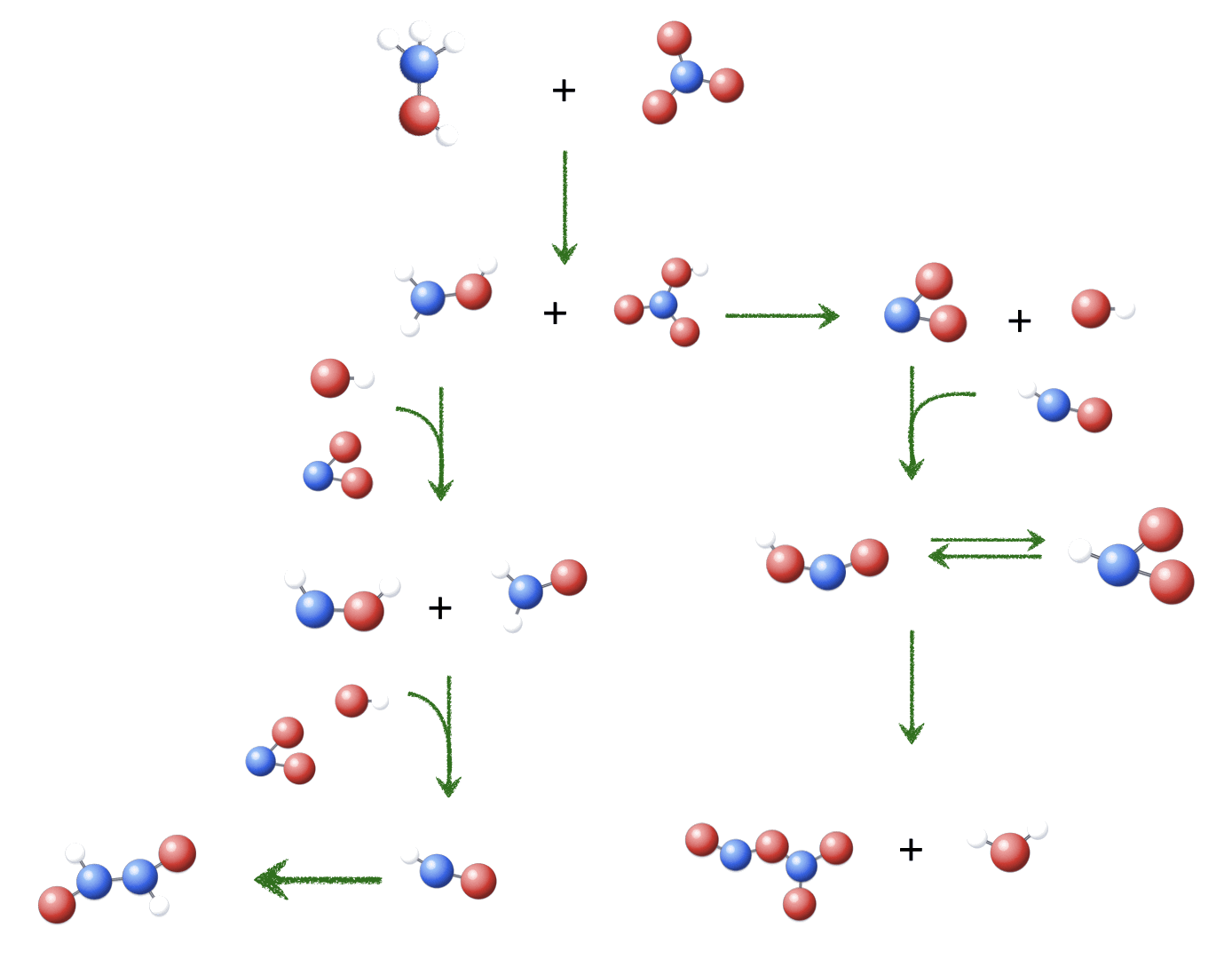
Every experiment involving HCN, cyanide reagents, diazonium intermediates, or unstable nitrogen compounds carries a safety burden. For R&D teams working on Strecker synthesis, cyanohydrin chemistry, Sandmeyer reactions, or related pathways, empirical condition screening can increase exposure, and consume process-safety resources.
Compular Lab brings molecular simulation into high-risk reaction development. Use simulation to reduce blind screening and select the most informative laboratory experiments for validation.
Reaction free-energy profiles
for cyanide and reactive nitrogen pathways: predict which conditions favour product formation, which favour side reactions, and which intermediates are most hazardous
Reaction free-energy profiles
for cyanide and reactive nitrogen pathways: predict which conditions favour product formation, which favour side reactions, and which intermediates are most hazardous
Decomposition barrier heights
for reactive intermediates: quantify which steps in the mechanism carry the highest kinetic risk
Decomposition barrier heights
for reactive intermediates: quantify which steps in the mechanism carry the highest kinetic risk
Solvent and temperature screening
for the reaction environment — computationally, without handling the reagents
Solvent and temperature screening
for the reaction environment — computationally, without handling the reagents
Synthesis & Additives
Predictive Route Screening for Fine Chemicals
Fine synthesis and specialty-intermediate R&D still depends heavily on empirical route and solvent screening.
Compular Lab models reaction pathways, solvent effects, side reactions, and molecular properties before pilot work begins.
Fewer blind experiments. Lower waste risk. Faster route decisions. Better chemistry before scale-up.
Reaction pathway mapping
free-energy profiles for candidate synthesis routes, identifying which steps have the highest barriers and which produce the most waste
Reaction pathway mapping
free-energy profiles for candidate synthesis routes, identifying which steps have the highest barriers and which produce the most waste
Solvent screening
predict how solvent choice affects reaction thermodynamics and selectivity, computationally
Solvent screening
predict how solvent choice affects reaction thermodynamics and selectivity, computationally
Property prediction
for novel fragrance and aroma molecules across large candidate libraries
Property prediction
for novel fragrance and aroma molecules across large candidate libraries
Polymer-Adjacent Additives
Screen Additives Before Weeks of Testing
Antioxidants, plasticisers, and UV stabilisers are still screened through slow experimental assays: Rancimat, oxidative induction time, migration testing, and accelerated weathering.
Each test can take days to weeks and often gives the outcome, not the molecular reason behind failure.
The bottleneck is molecular: how fast radicals are scavenged, how quickly additives migrate through the polymer, and which candidates degrade during processing or service.
Bond dissociation energies
for radical-scavenging groups: rank antioxidant effectiveness by the energy required to abstract the active hydrogen
Bond dissociation energies
for radical-scavenging groups: rank antioxidant effectiveness by the energy required to abstract the active hydrogen
Diffusion coefficient prediction
for migration-controlling properties: which additives will migrate fastest through a given polymer matrix
Diffusion coefficient prediction
for migration-controlling properties: which additives will migrate fastest through a given polymer matrix
Electrochemical and chemical stability assessment
which candidates degrade under processing or service conditions
Electrochemical and chemical stability assessment
which candidates degrade under processing or service conditions
Coatings, Adhesives & Surface Formulations
Screen Solvent Blends and Reactive Diluents Faster
VOC limits, UV-cure performance, and adhesive compatibility are still solved through repeated blend-and-test cycles. Each formulation depends on composition: solvent ratio, evaporation rate, reactive diluent stability, tackifier compatibility, and polymer–solvent interactions.
The bottleneck is molecular: which components mix, which phase-separate, which evaporate too fast, and which reactive diluents survive processing and cure.
Solvent blend screening
viscosity, miscibility, and evaporation behaviour across VOC-compliant composition space
Solvent blend screening
viscosity, miscibility, and evaporation behaviour across VOC-compliant composition space
Compatibility prediction
for tackifier/polymer/solvent systems: which combinations phase-separate, which stay homogeneous
Compatibility prediction
for tackifier/polymer/solvent systems: which combinations phase-separate, which stay homogeneous
Viscosity, miscibility, and evaporation behaviour
across your solvent blend composition space
Viscosity, miscibility, and evaporation behaviour
across your solvent blend composition space
Specialty & Green Solvents
Specialty & Green Solvents
Screen Greener Chemistry Before Synthesis
Deep eutectic solvents, bio-derived alternatives and next-generation extraction media can offer promising routes forward, but their viscosity, miscibility, density, solvation behaviour, and stability often need to be built from scratch.
Compular Lab brings molecular modelling into solvent replacement R&D, helping you understand which candidates are likely to work, which may fail, and which are worth synthesising when regulation, customer specifications, or process conditions change.
Bulk property prediction
(viscosity, miscibility, density, solvation behaviour) for novel molecular structures — the data that doesn't exist in handbooks
Electrochemical and chemical stability screening
which candidates degrade under process conditions, and through which pathway
High-throughput virtual screening
across hundreds of candidate structures in days
Fluorochemicals & PFAS
Alternatives
Fluorochemicals & PFAS
Alternatives
Predictive R&D for PFAS-Free Formulations
PFAS restrictions and customer pressure are forcing chemical companies to reformulate faster than experimental data can be generated. The replacement space is broad, but most candidates lack reliable information on performance, degradation, persistence, and process compatibility.
Compular Lab helps you screen PFAS alternatives before synthesis or scale-up. Predict properties, identify degradation risks, assess electrochemical stability where relevant, and rank candidates for experimental validation. The result: faster reformulation decisions, fewer blind experiments, and a clearer path toward safer, high-performance PFAS alternatives.
Degradation pathway analysis
predict environmental persistence by mapping which bonds break, under which conditions, and what fragments accumulate
Bulk property prediction
across hundreds of candidate structures: viscosity, surface tension, thermal stability
Electrochemical stability screening
where the replacement is used in electrochemical contexts (e.g. ionomer alternatives)
Cyanide & Reactive
Nitrogen Chemicals
Computational Screening for High-Risk Reaction Pathways.
Every experiment involving HCN, cyanide reagents, diazonium intermediates, or unstable nitrogen compounds carries a safety burden. For R&D teams working on Strecker synthesis, cyanohydrin chemistry, Sandmeyer reactions, or related pathways, empirical condition screening can increase exposure, and consume process-safety resources.
Compular Lab brings molecular simulation into high-risk reaction development. Use simulation to reduce blind screening and select the most informative laboratory experiments for validation.
Reaction free-energy profiles
for cyanide and reactive nitrogen pathways: predict which conditions favour product formation, which favour side reactions, and which intermediates are most hazardous
Decomposition barrier heights
for reactive intermediates: quantify which steps in the mechanism carry the highest kinetic risk
Solvent and temperature screening
for the reaction environment — computationally, without handling the reagents
Synthesis & Additives
Predictive Route Screening for Fine Chemicals
Fine synthesis and specialty-intermediate R&D still depends heavily on empirical route and solvent screening.
Compular Lab models reaction pathways, solvent effects, side reactions, and molecular properties before pilot work begins.
Fewer blind experiments. Lower waste risk. Faster route decisions. Better chemistry before scale-up.
Reaction pathway mapping
free-energy profiles for candidate synthesis routes, identifying which steps have the highest barriers and which produce the most waste
Solvent screening
predict how solvent choice affects reaction thermodynamics and selectivity, computationally
Property prediction
for novel fragrance and aroma molecules across large candidate libraries
Polymer-Adjacent
Additives
Screen Additives Before Weeks of Testing
Antioxidants, plasticisers, and UV stabilisers are still screened through slow experimental assays: Rancimat, oxidative induction time, migration testing, and accelerated weathering.
Each test can take days to weeks and often gives the outcome, not the molecular reason behind failure.
The bottleneck is molecular: how fast radicals are scavenged, how quickly additives migrate through the polymer, and which candidates degrade during processing or service.
Bond dissociation energies
for radical-scavenging groups: rank antioxidant effectiveness by the energy required to abstract the active hydrogen
Bond dissociation energies
for radical-scavenging groups: rank antioxidant effectiveness by the energy required to abstract the active hydrogen
Diffusion coefficient prediction
for migration-controlling properties: which additives will migrate fastest through a given polymer matrix
Diffusion coefficient prediction
for migration-controlling properties: which additives will migrate fastest through a given polymer matrix
Electrochemical and chemical stability assessment
which candidates degrade under processing or service conditions
Electrochemical and chemical stability assessment
which candidates degrade under processing or service conditions
Coatings, Adhesives &
Surface Formulations
Screen Solvent Blends and Reactive Diluents Faster
VOC limits, UV-cure performance, and adhesive compatibility are still solved through repeated blend-and-test cycles. Each formulation depends on composition: solvent ratio, evaporation rate, reactive diluent stability, tackifier compatibility, and polymer–solvent interactions.
The bottleneck is molecular: which components mix, which phase-separate, which evaporate too fast, and which reactive diluents survive processing and cure.
Solvent blend screening
viscosity, miscibility, and evaporation behaviour across VOC-compliant composition space
Compatibility prediction
for tackifier/polymer/solvent systems: which combinations phase-separate, which stay homogeneous
Viscosity, miscibility, and evaporation behaviour
across your solvent blend composition space
Cyanide & Reactive
Nitrogen Chemicals
Computational Screening for High-Risk Reaction Pathways.
Every experiment involving HCN, cyanide reagents, diazonium intermediates, or unstable nitrogen compounds carries a safety burden. For R&D teams working on Strecker synthesis, cyanohydrin chemistry, Sandmeyer reactions, or related pathways, empirical condition screening can increase exposure, and consume process-safety resources.
Compular Lab brings molecular simulation into high-risk reaction development. Use simulation to reduce blind screening and select the most informative laboratory experiments for validation.
Reaction free-energy profiles
for cyanide and reactive nitrogen pathways: predict which conditions favour product formation, which favour side reactions, and which intermediates are most hazardous
Reaction free-energy profiles
for cyanide and reactive nitrogen pathways: predict which conditions favour product formation, which favour side reactions, and which intermediates are most hazardous
Decomposition barrier heights
for reactive intermediates: quantify which steps in the mechanism carry the highest kinetic risk
Decomposition barrier heights
for reactive intermediates: quantify which steps in the mechanism carry the highest kinetic risk
Solvent and temperature screening
for the reaction environment — computationally, without handling the reagents
Solvent and temperature screening
for the reaction environment — computationally, without handling the reagents

Frequently Asked Questions
From setup to support, here are the answers you need to launch faster with confidence.
Do I need design or coding experience to use this?
More than just SaaS—perfect for creators, freelancers, and agencies who want sleek, high-performing sites fast.
Can I customize everything in the template?
Is this template only for SaaS founders?
How fast can I get my site live?
Can I use this for client projects?
Is Framer free to use with this template?
What is Compular Lab?
How does Compular Lab help material development?
Who can use Compular Lab?
What types of material properties can Compular Lab analyse?
Can you simulate multi-component systems such as electrolytes or complex formulations?
Can you simulate electrolytes as a function of temperature and voltage?
Do you provide molecular-level insights?
Does Compular Lab run simulations automatically?
Is there a demo or trial version available?
What makes Compular Lab different from traditional material R&D?
Frequently Asked Questions
Frequently Asked Questions
What is Compular Lab?
How does Compular Lab help material development?
Who can use Compular Lab?
What types of material properties can Compular Lab analyse?
Can you simulate multi-component systems such as electrolytes or complex formulations?
Can you simulate electrolytes as a function of temperature and voltage?
Do you provide molecular-level insights?
Does Compular Lab run simulations automatically?
Is there a demo or trial version available?
What makes Compular Lab different from traditional material R&D?

Accelerate materials discovery
with AI & multiscale simulations.
Compular turns complex molecular design into fast, reliable predictions, helping researchers innovate and drive sustainable solutions.
Accelerate materials discovery
with AI & multiscale simulations.
Compular turns complex molecular design into fast, reliable predictions, helping researchers innovate and drive sustainable solutions.