News

Simone Manti
Machine Learning Engineer at Compular

Developing a new battery electrolyte means navigating a set of conflicting requirements. You need good ionic conductivity for the battery to charge and discharge efficiently. You need low enough viscosity for the electrolyte to flow, wet electrode surfaces, and keep working at low temperatures. And you need a formulation that is commercially viable to produce. These goals push against each other, and finding a mixture that handles all three well is genuinely hard.
The traditional path is iterative bench work: propose a formulation based on experience, mix it, measure it, adjust, repeat. That process is slow, expensive, and tends to explore only the space that the team already knows.
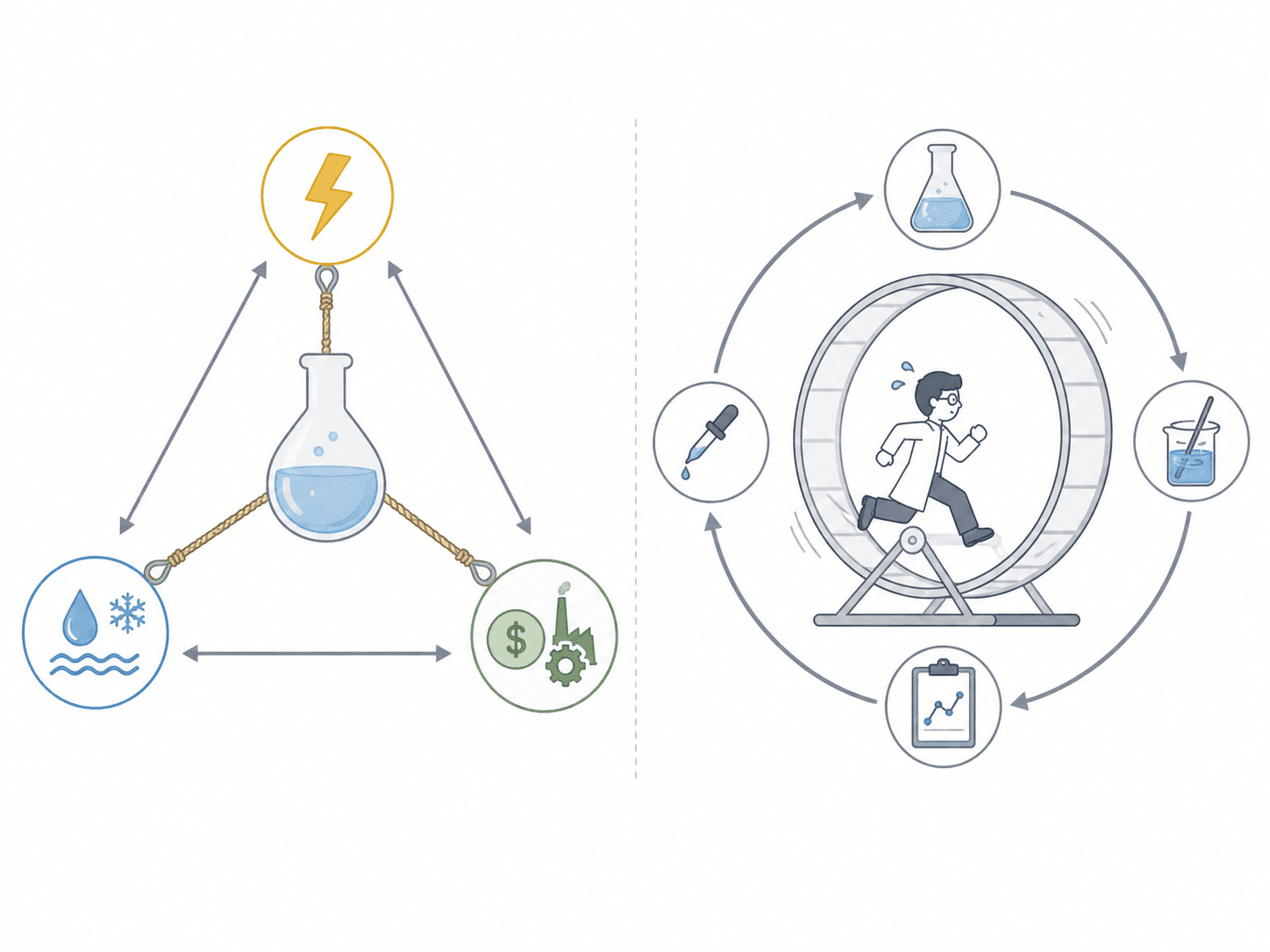
Figure 1: The traditional iterative process.
What Compular does instead
We start from the same domain knowledge your chemists carry, which salts pair well with which solvents, what concentration ranges are physically reasonable, which co-solvents help at low temperatures, and use it to generate a large, diverse set of candidate formulations computationally. Instead of testing ten formulations over a month, we evaluate thousands in a matter of minutes!
Each candidate is then scored by predictive models trained on published experimental data. These models estimate ionic conductivity and viscosity at your target temperature, without running a single experiment. The candidates are then filtered to surface the ones where no other formulation in the pool is strictly better across all three objectives at once: conductivity, fluidity, and cost per liter.
What you get out of this process is not a single recommended formulation. It is a prioritized shortlist (typically ten to fifty candidates) that collectively maps the achievable trade-off space. Some will sit at the high-conductivity end. Some will favor fluidity at low temperatures. Some will be the most cost-effective options.
What this means for your workflow
The bench work does not go away. What changes is how you enter it. Instead of running experiments to explore a space you do not yet understand, you run experiments to confirm the most promising candidates from a space that has already been computationally mapped.
This is particularly valuable when you need to hit a specific performance target, e.g., maintaining adequate conductivity at −20°C while keeping viscosity below a threshold that allows normal cell assembly, because the computational screen can be constrained to those requirements from the start.
The models also get better as you use the platform. If your target chemistry sits at the edge of what existing published data covers, the system has three ways to close that gap: it can automatically locate additional experimental measurements from the literature for relevant compositions; it can run physics-based simulations to estimate properties where no published data exists; and once you have measured your shortlisted candidates in the lab, you can feed those results back in. Each cycle, the predictions become more accurate for your specific corner of chemical space. Over time, the shortlists get sharper.
Get in touch
If you are working on electrolyte formulation and want to see how this would apply to your specific chemistry and temperature targets, we would be glad to walk through it. Reach out to info@compulartech.com for further information or to book a demo.